Europe Floods
Century Floods
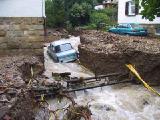 PRAGUE - Foreign aid arrived in Prague Thursday to help residents of the Czech capital cope with the worst floods in a century as Dresden and Bratislava became the latest central European cities to come under the threat of massive flooding. Planes and disaster relief crews from Belgium, Greece, Germany, Japan, and France arrived in the Czech Republic where some 200,000 people have been evacuated from their homes after the Vltava and Elbe rivers burst their banks, Foreign Minister Cyril Svoboda said.
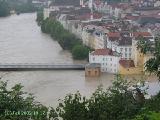 Ten people have died in the disaster in the Czech republic, 13 in Germany and dozens more in other countries of central and eastern Europe, bringing the death toll from more than a week of torrential rain to at least 90. While Czech authorities carried out damage assessment, hydrologists said the Vltava's water level was receding after the rain stopped but warned that other regions in the north where new evacuations were ordered overnight faced flooding. In Bratislava, the Danube was continuing to rise and could top 10 meters (about 30 feet) in the coming hours, a level more devastating than the 1954 floods, according to an official from the Danube bassin authority in Bratislava, Vladimir Stolarik.
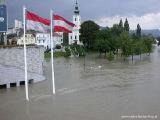 Evacuations were already under way in Bratislava where a state of emergency was declared on Wednesday as workers put up sandbags and barriers in the most vulnerabe parts of the capital. In Dresden, German army helicopters evacuated some 170 intensive care patients from hospitals in the flood-hit eastern city, a spokesman for the city said early Thursday. Police and rescue teams worked frantically as Prague's 1.2 million residents saw the Vltava river reach its peak in the early afternoon Wednesday at three times above normal levels, officials said.
Water lapped around historic monuments in the city centre, where residents of the picturesque Old Town and the former Jewish quarter were ordered to evacuate. Czech public transport authorities said repairs to the Prague subway would take weeks, perhaps even months, but three lines were operating on Thursday. The situation in the Prague metro is truly tragic, said Michaela Kusharova of the urban transport commission.
The Czech government declared a state of emergency in Prague and nearby areas on Monday. Czech President Vaclav Havel returned from holiday in Portugal to confront the disaster and discuss the government's responses with Prime Minister Vladimir Spidla, as the rest of Europe rallied in support.
On the Danube and the Elbe rivers the situation was deteriorating, meaning the worst may be still to come for parts of Austria and Germany where huge swathes of land were already underwater. German Chancellor Gerhard Schroeder, after a brief visit to flood-hit Saxony, said eastern Germany was facing a disaster which could wipe out years of development work since reunification in 1990.
Saxony's historic capital Dresden was the worst affected area, although parts of the southern state of Bavaria are also ravaged, particularly the city of Regensburg. However, eastern Germany could soon be hit by another wave of water flowing downstream from the Czech Republic.
The Elbe (which flows through Dresden) will then be carrying twice as much water into Germany as normal and that huge wave has go to somewhere, a local meteorologist said.
Thousands of people have been evacuated from their homes in and around Dresden, where the main rail station is flooded, the Renaissance-style Semper opera house has been hit and valuable paintings were moved. The Danube was approaching record levels in Regensburg, up to five metres (18 feet) or more above the norm for this time of year, as well as in the Austrian capital Vienna.
Fresh floods hit eastern Austria Wednesday, just as tens of thousands of people in much of the rest of the Alpine country started to come to terms with losing everything after days of devastating heavy rains. Clean-up operations began throughout much of Austria, but some towns remained submerged as waters receded after seven people died in the worst flooding the country has seen in a century.
The governors of Upper and Lower Austria, the two provinces most severely hit, have put the cost of damage at up to three billion euros. President Thomas Klestil said Tuesday the floods were the worst Austria has seen since the republic was founded in 1918. The death toll there remained at seven on Wednesday.
The Russian emergencies ministry Wednesday revised last week's death toll from the flooding there upwards by one to 59. Holiday villages swept away in Russian Black Sea coast flooding which claimed those lives were not up to proper safety standards, the state attorney's department charged.
Copyright 2002 AFP & Weatheronline