Birmingham tornado, July 2005
Twister in context
By Philip Eden
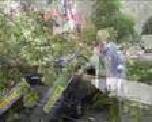 It is now five years since a tornado cut a swath through the southeastern suburbs of Birmingham, affecting in particular Balsall Heath and Moseley. The date was July 28, about twenty people were injured, and there was extensive property damage. Curiously, the twister's track was just a few hundred metres away from that followed by Birmingham's previous major tornado which hit in June 1931.
When I first heard about the Birmingham tornado I started counting the minutes to the moment someone tried to blame it on global warming. Sure enough, barely two hours later, up popped a self-styled expert on the six o'clock news telling us that these tornadoes will become more frequent and more intense in the future thanks to our changing climate.
Freak weather has always been the stuff of newspaper headlines, but in recent times something odd has been happening to the way we perceive such events. These days, when we get a burst of extreme weather, especially if it impinges adversely on our day-to-day lives, we demand an explanation or a scapegoat - preferably both. And the nearest scapegoat is global warming.
There is certainly an argument that warming the Earth's atmosphere is likely to change the frequency and intensity of extreme events, but, crucially, the Birmingham tornado, the previous month's flash flood in Helmsley, North Yorkshire, and Boscastle disaster the year before, all fell well within the envelope of past extremes. That these disasters these days seem to be having a much greater effect on human communities than they did 100 years ago is undoubtedly true, but that is a different argument.
So how did the mayhem that Thursday afternoon in July 2005 compare with previous British tornadoes? Thanks to TORRO (the Tornado and Storm Research Organisation) we now have a comprehensive chronology of these events as well as a means of categorising them. The 2005 event ranked T4 on the TORRO scale from which we can infer rotational windspeeds of 115-136mph, and possibly reached T5 (137-155mph) in that part of Balsall Heath where the damage to property was severest.
According to TORRO there are, on average, 30 to 40 tornadoes reported annually in the UK. Of these, about five per cent reach an intensity of T4 and just one per cent make T5. A quick calculation reveals that a T5 tornado will hit roughly once every three years, but the vast majority of these will occur in rural areas with consequently limited impact on human lives. TORRO have designated nine British tornadoes T7 (around 200mph) or T8 (225mph), their severity having been estimated from contemporary accounts. Three of these occurred during the last century: at Edwardsville, Glamorgan, on October 27, 1913, at South Kelsey, Lincolnshire, on October 25, 1937, and in west London on December 8 1954.
Far from needing to point the finger, these facts suggest that Britain is long overdue a tornado one or two orders of magnitude more intense than the one in Birmingham five years ago.
© Philip Eden