Can�t sleep, won�t sleep
UK�s hottest summer nights
By Philip Eden
For those of us who dislike hot weather, early-August has delivered some of the most uncomfortable weather for many a long year. The combination of high temperature and high humidity which has lasted for well over a week has been, in many ways, more unpleasant than the 2003�s record-breaking heatwave when humidity levels were significantly lower.
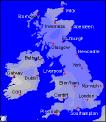 Daytime temperatures were not exceptionally high during the recent hot spell, the highest maximum recorded under standard conditions being 31.5°C at Northolt in northwest London on the 8th. However, the night of the 8th/9th turned out to be one of the warmest ever, a few new local records were established, but it fell just short of breaking any important records.
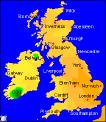 After the heat of the day, dense layers of altostratus and altocumulus advanced north-eastwards across the UK, slowing down the usual cooling process after dark, and the persistent south-easterly breeze delivered air which had been heated during the preceding afternoon over eastern France. Indeed, several observers noted that the temperature actually rose a degree or two during the late-evening, before edging back again after midnight. In many areas rain helped reduce temperature-levels to around 20�C, but at several sites in Kent, East Anglia, northeast England, and inland parts of northern Scotland, it remained dry throughout and it was in these areas that local records were broken.
The highest minimum at an official site for the period 2100-0900 GMT was 21.9�C at RAF Marham, in west Norfolk, while in Scotland Aviemore topped the list with 19.5�C. The English national record of 23.9�C observed at Brighton on the morning of August 3rd 1990, and the Scottish record of 20.0�C at Stirling logged way back in August 1932, both remain intact.
(c) Philip Eden