A Victorian heatwave
Setting the record straight
By Philip Eden
The surge of warmth during the latter part of July provided a timely reminder that we have just passed the anniversary of one spectacularly hot day which held pride of place in many record-books for the best part of a century. You won't find it there now, though.
 It happened 136 years ago. On the evening of July 22, 1868, Dr G.H. Fielding of Tonbridge, Kent, read his thermometers and noted a maximum temperature for the day of 100.5F (38.1C). Not until the summer of 2003 was such a reading again emulated in the UK, but Dr Fielding’s record was dropped many years before that.
So why has the Tonbridge figure, accepted for so many years, been discarded? The difficulty is that nineteenth century weather recorders, at least until the 1880s, did not have a have an accepted standard for the exposure of their instruments. That is not to cast any aspersions on their observational competence: the majority of them certainly carried out their meteorological duties with great assiduity. The fact is that many thermometers were attached to north-facing walls, while during the second half of the century more and more were hung on specially designed stands and shelters that protected the instruments from the rain and also from direct sunlight, but were otherwise left open to the elements.
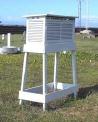 The modern thermometer shelter, the Stevenson screen, was designed in the 1860s by Thomas Stevenson, a prominent engineer and the father of Robert Louis Stevenson. It has louvred sides, a double roof, and a slatted base, devised to allow free movement of the air at the same time as preventing any heat from the sun (either direct, or reflected from walls or the ground) from entering it. Early Stevenson screens were open at the bottom, and were therefore likely to absorb heat radiating from the soil beneath.
Fielding's Tonbridge shelter was similar to an early Stevenson screen, having no base to it, and it was also located over gravel rather than grass. A comparison with the readings from neighbouring stations showed that it regularly over-heated – sometimes by as much as 3 or 4 degC – on hot days. Expert reconstruction of the weather on July 22 1868 indicates that a standard Stevenson screen temperature in the area would have been around 35-36C.